
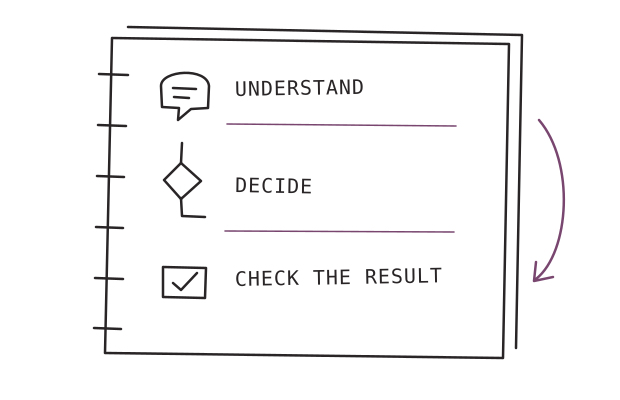
Understand the problem, make a decision, and check the result.
Who thrives here
You care about the problem, the people using the product, and what happens after you ship.
Full Stack Thinkers
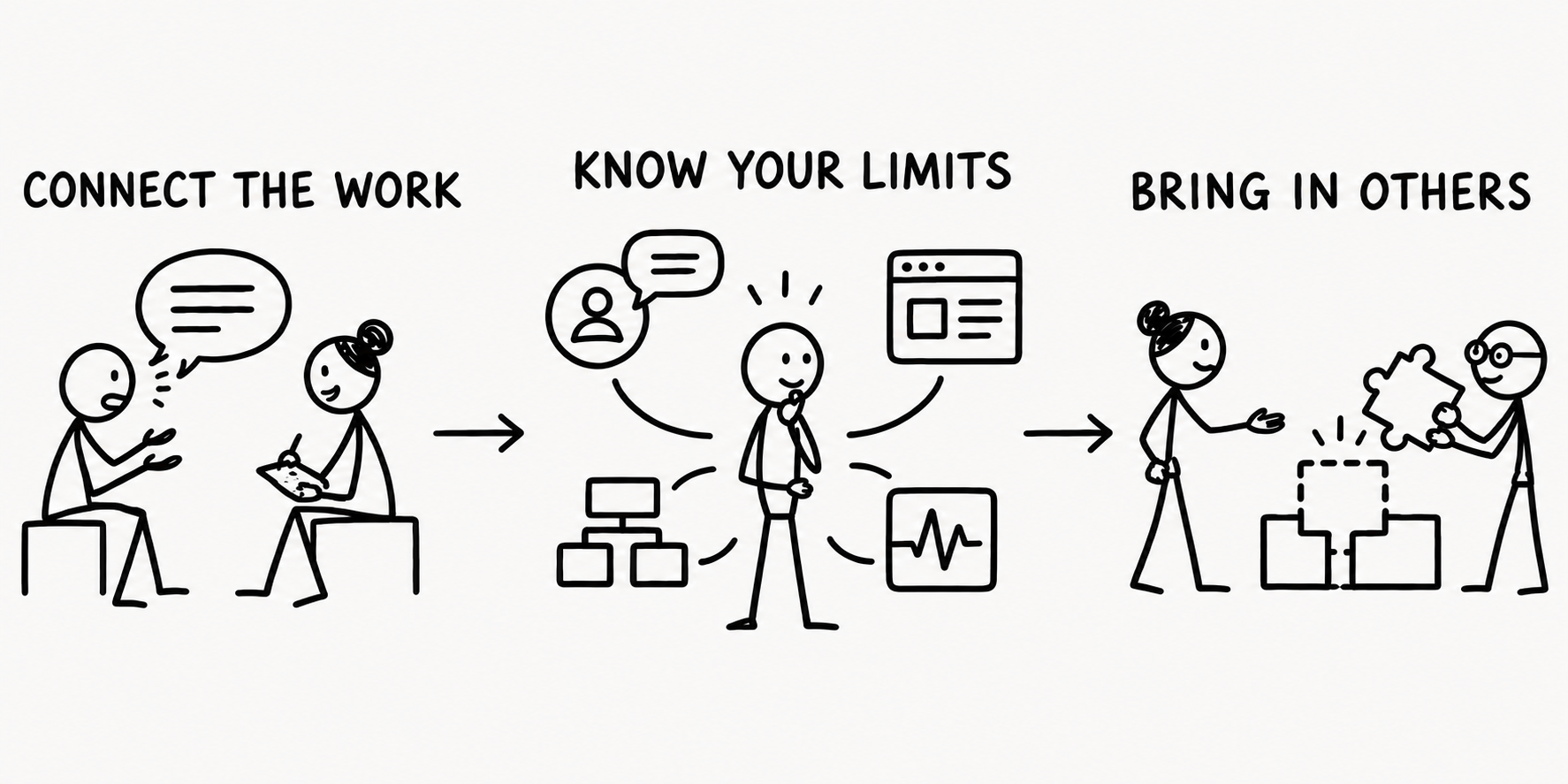
Connect user needs, product decisions, architecture, and operations. Know where your expertise ends and whom to bring in. This is a way of thinking for architects, engineers, and delivery leads.
- Stay close to users
- Watch the workflow. Let what people experience change your design.
- Prefer systems over heroics
- Fix the failure, then improve the system that allowed it.
- Write it down
- Leave decisions, reasoning, and open questions with the work.
- Own the consequence
- Check the result after release. Help close the gap when it misses the need.
Our culture code
Seven principles for how we decide, disagree, learn, and deliver.
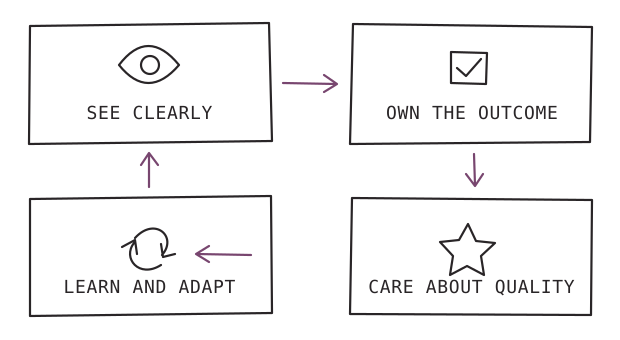
- Assume Nothing
- Name what you know and what you are assuming. Verify what matters.
- Take Bottomline Ownership
- Stay with the intended outcome. Surface blockers and close the loop.
- Embrace Change
- Revise the plan when the evidence changes. Keep the purpose clear.
- Push Our Limits
- Stretch your skill and judgment. Ask for help. Growth does not require exhaustion.
- Pay an Insane Amount of Attention to Details
- Check the details that carry trust, from error states to access and handoffs.
- Listen to and Speak the Truth
- Bring evidence. Make bad news discussable. Be willing to be corrected.
- Create World-Class Everything
- Make quality visible in the work. A first version can be small and still be carefully made.
Room to grow
Learn with people who see things differently. Share what you know. Build a career that supports a life you value.
Agree on the outcome and constraints. Choose your approach, explain it, and stay open to a better one.


The work
Join the environment. Ship a useful increment. Leave the system clearer.
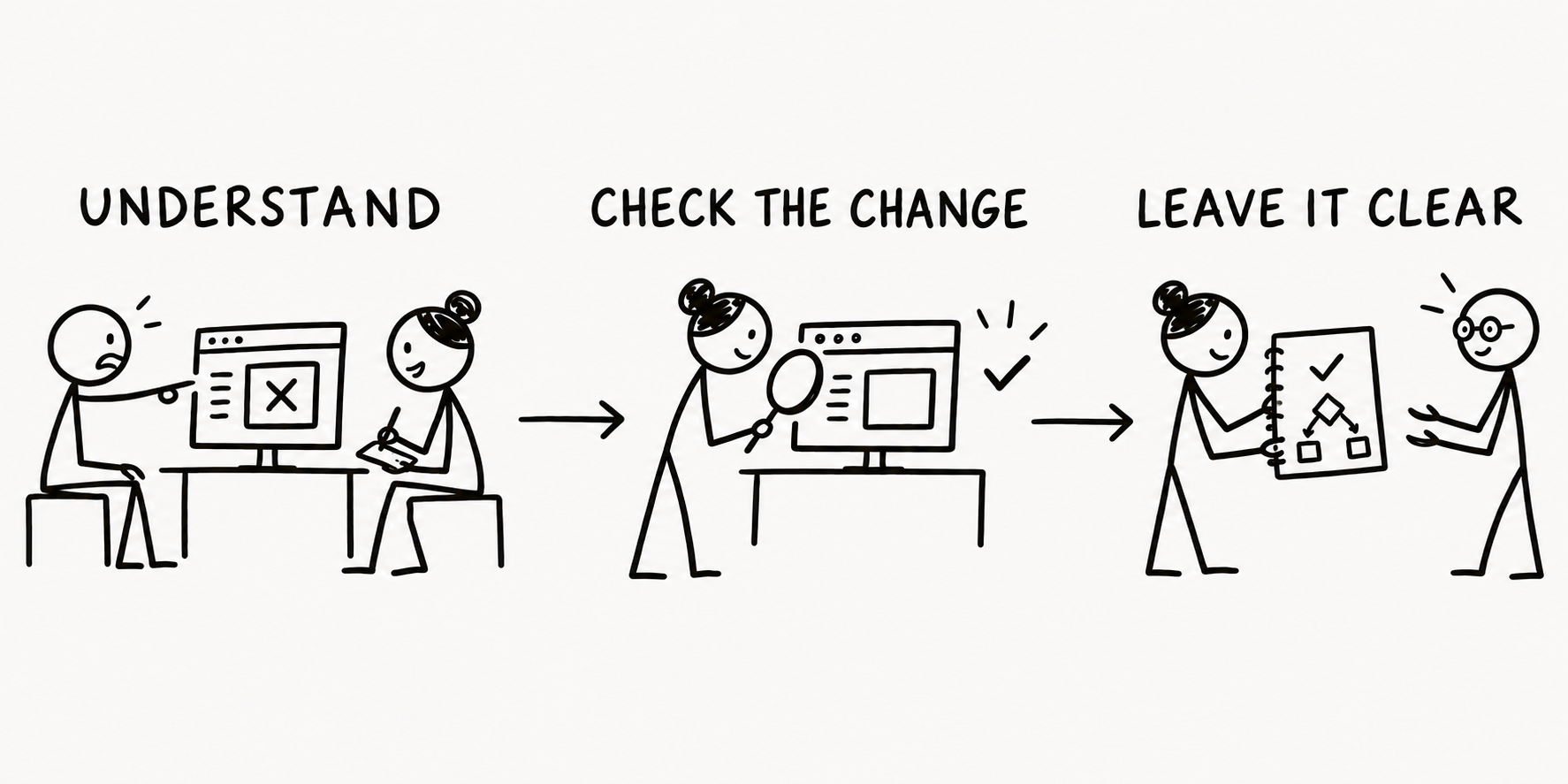
Join the environment
Learn the workflow, constraints, and decision process. An embedded engineer needs context beyond the ticket.
Ship a useful increment
Agree on a useful change. Build, review, and check it in use. Explain the tradeoffs.
Leave the system clearer
Leave tests, decisions, and operating notes that another engineer can use.
Understand the problem. Take responsibility for the change.
Role families
Tell us where you want to contribute. These are areas of work for career inquiries, not current vacancies.
- FDE
- Work close to users inside a product team’s environment, turning an agreed problem into working software.
- Product engineer
- Connect product behavior, implementation, and maintainability so the next useful change is easier to make.
- Production AI engineer
- Bring AI into real workflows with attention to evaluation, failure modes, and how the system will be operated.
- Delivery lead
- Keep priorities, decisions, and responsibilities clear so the team can deliver and handle the consequences.
For context on what we ship for clients:
How to write
Introduce yourself and the work you want. Explain one project: the problem, your role, a decision, and what you learned. Include only links you have permission to share.
This is an expression of interest, not a listing for a specific open position. Please do not send confidential client material or sensitive identity documents.
Questions before we start
How does an FDE at UCS differ from a frontier-lab FDE?
An FDE at UCS delivers software inside a client team, including production AI where needed. The role does not imply model research or work for a particular AI provider; compare responsibilities when considering frontier-lab roles.
Is this remote work or an on-site embed?
An embed means working within a client team’s environment and decision process. Remote, hybrid, or on-site arrangements, travel, time-zone overlap, and access requirements depend on the specific role.
Are there open roles?
UCS currently collects expressions of interest, not applications for listed vacancies. Introduce yourself at jobs@ucs.tech; an inquiry does not guarantee an available role or an interview.
What should I email?
Email a short introduction, the work you want to do, and one project explaining your role and decisions. Include only shareable links, without confidential client material or sensitive identity documents.
Who thrives at UCS?
Full Stack Thinkers connect user needs, product decisions, architecture, and operations, and know when to bring in others. They verify assumptions, own outcomes, adapt, care about details and quality, and speak honestly. Growth includes learning with others, not exhaustion.
How does engineering work at UCS differ from ticket-only staffing?
UCS engineers are expected to understand the user problem, explain tradeoffs, ship useful changes, and leave systems easier to operate. That includes questioning an assigned task when it misses the underlying need.