
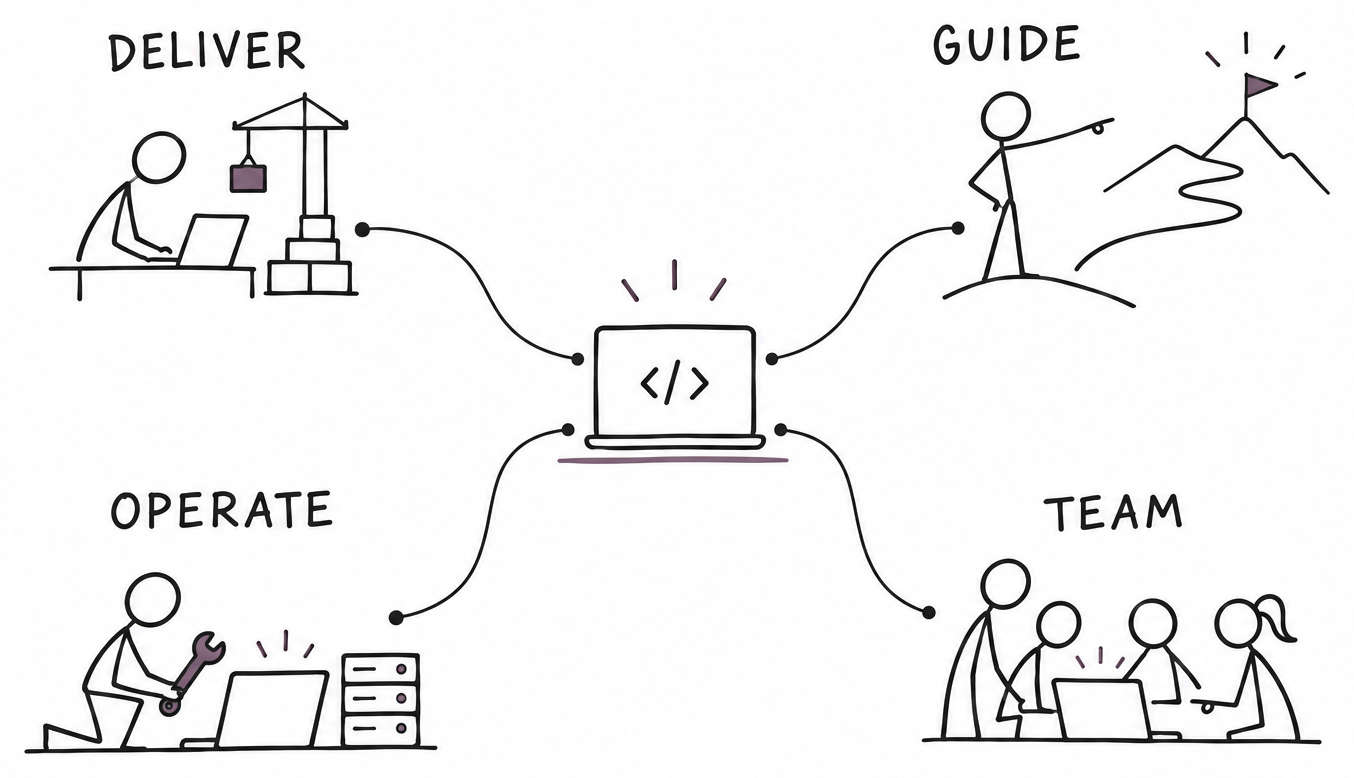
Start with the gap: hands-on delivery, leadership, continuity, or sustained capacity. The engagement follows that responsibility.
UCS product engineering services combine an engagement model with the capability your product needs. The engagement defines who owns delivery, decisions, and operations; capabilities include product engineering and production AI. Founders, product teams, and operators use this map to assign responsibility across Build, Scale, and Evolve.
How we work with you
Engagement models
Choose the responsibility you need us to take on.
Embedded delivery
Forward Deployed Engineers
UCS engineers work alongside your people, in your environment, to ship a defined outcome.
Explore FDE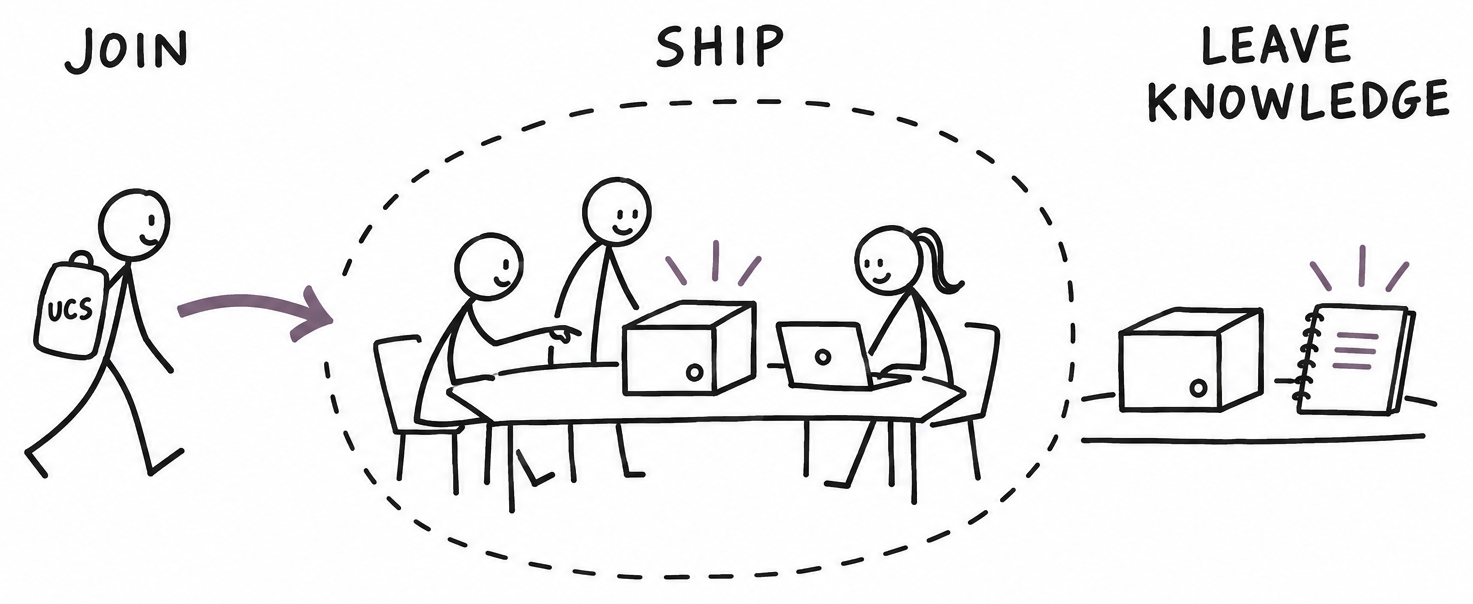
Operator readiness
Reverse FDE
Your operators learn inside UCS delivery systems to prepare for ownership, a build-operate-transfer (BOT) transition, or scale without a permanent embed.
Explore Reverse FDE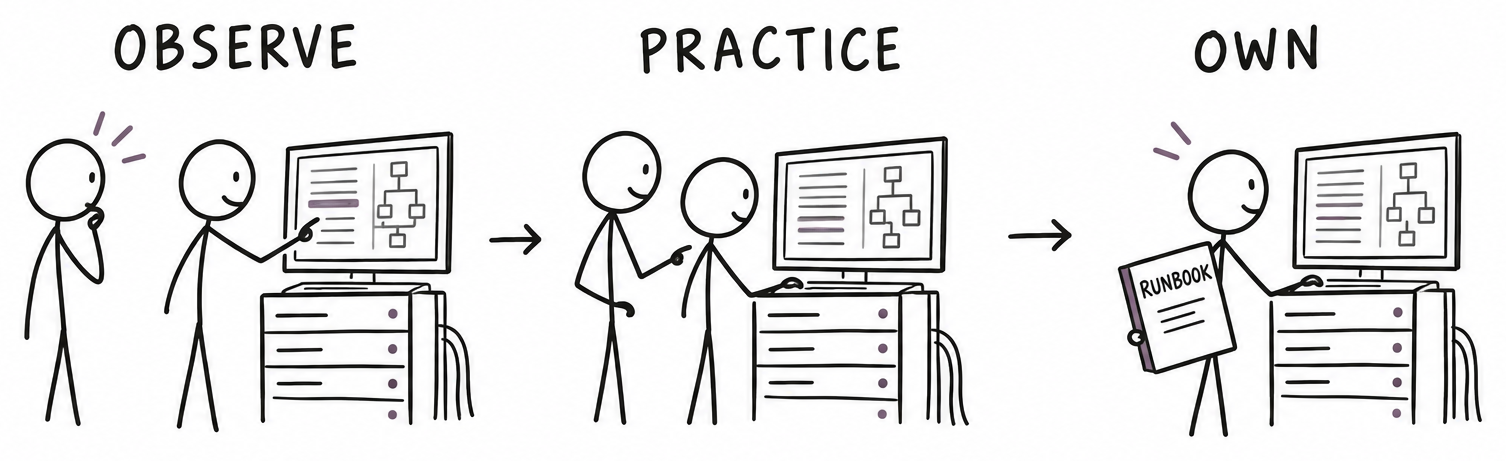
Senior leadership
Fractional X
A fractional CTO, CPO, Head of Engineering, or AI lead gives your team’s decisions an owner.
Explore Fractional X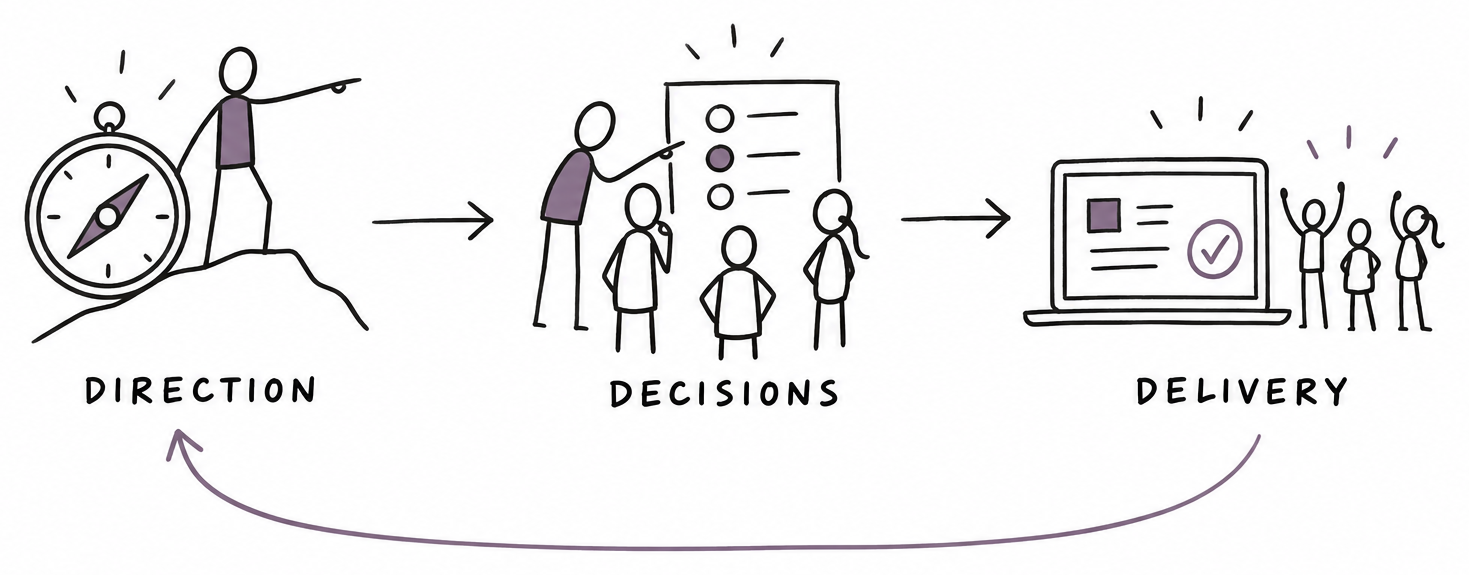
Ongoing care
Managed support
Keep a live system healthy with agreed responsibility for incidents, maintenance, and improvement.
Explore managed support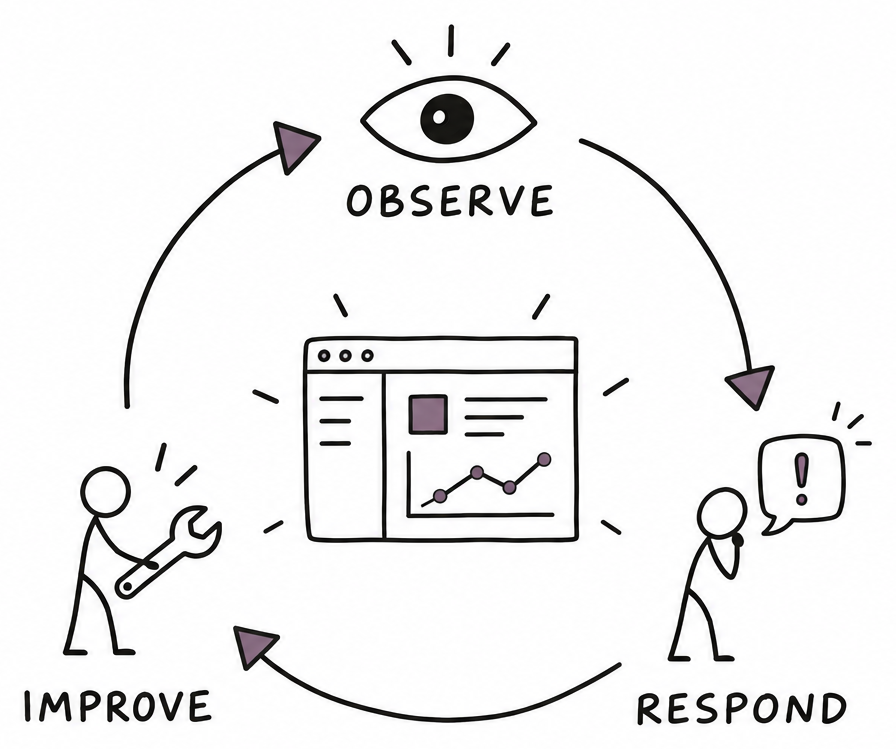
Sustained capacity
Dedicated teams / BOT
Build a team for a continuing roadmap, with an explicit path to operating or transferring it.
Explore Dedicated / BOT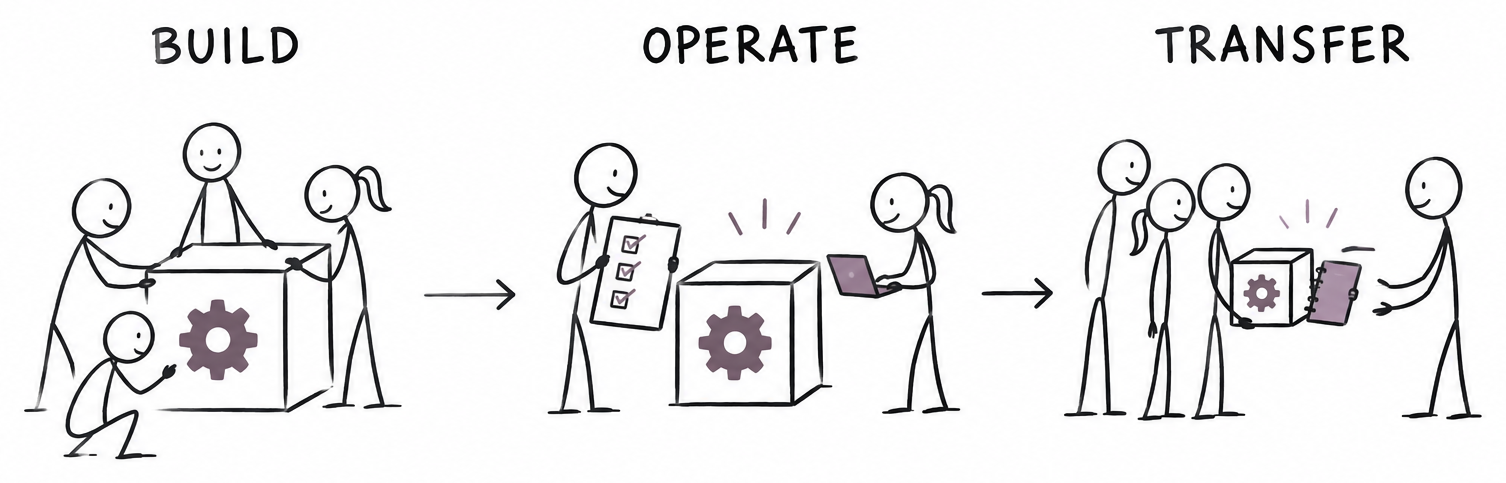
What we deliver
Capabilities
Apply either capability within the engagement that fits your team.
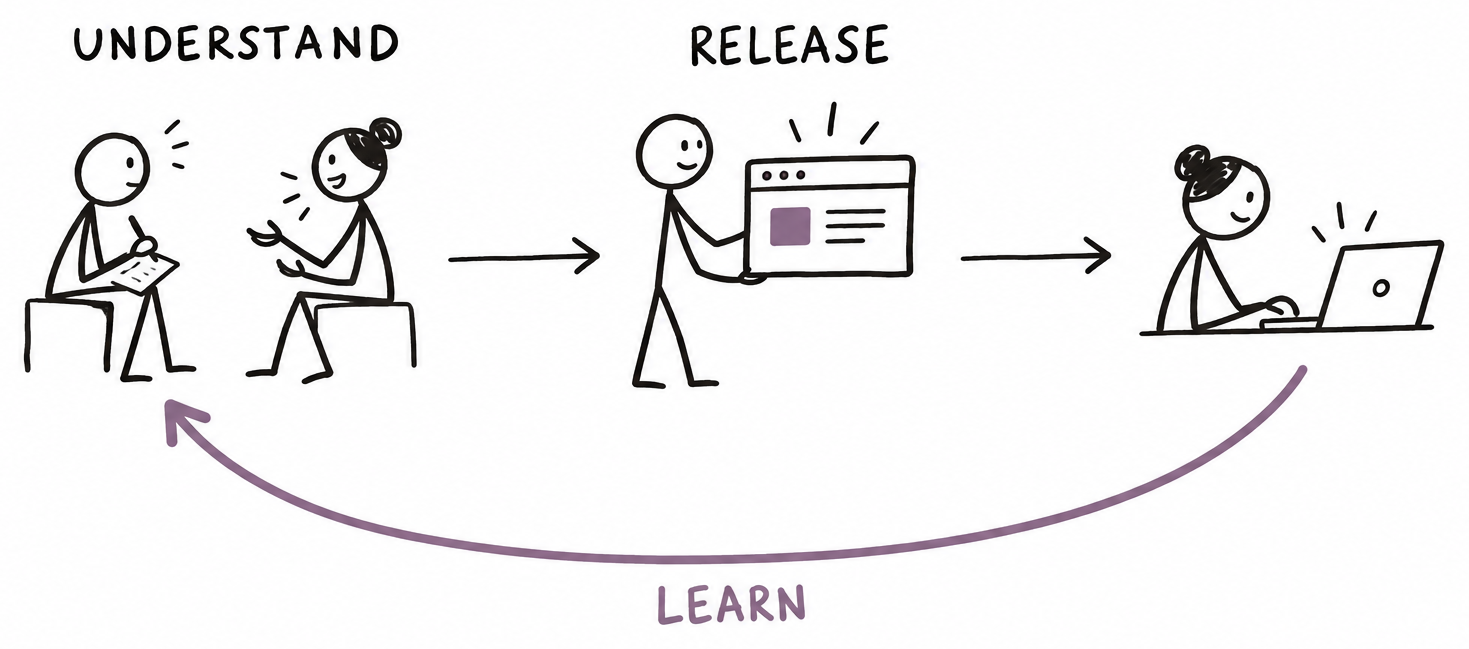
Product engineering
Build a first useful release, grow a platform, or modernize working software.
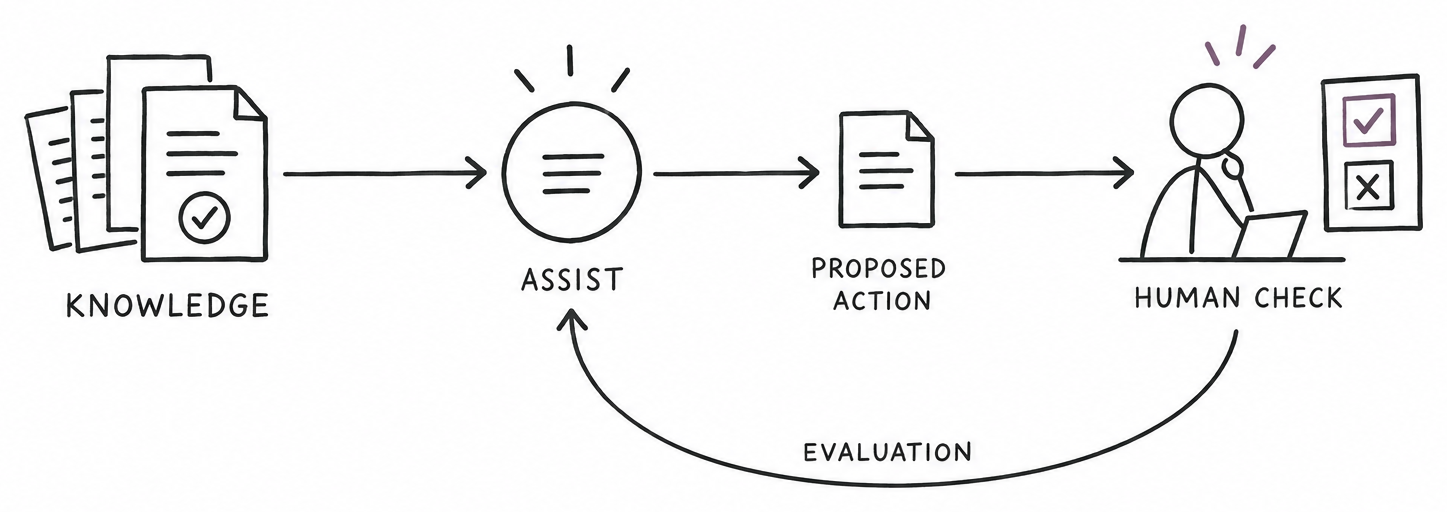
AI and agentic systems
Bring retrieval, assistants, and bounded automation into real workflows.
Cloud infrastructure, data engineering, and modernization sit within the agreed delivery scope.
Which way of working fits your team?
An engagement defines how responsibility is shared between your team and UCS. Start with the gap: do you need someone to build alongside you, guide technical decisions, keep a live system healthy, or provide a continuing team?
Answer four questions about your product stage, the help you need, future ownership, and whether the work centers on product engineering or AI. The result suggests a model to discuss, not a quote or commitment. If several needs apply, choose the one blocking progress today.
Choose from the fit guide
Build a first release, Scale a working product, or Evolve an established system. Then choose the responsibility you need help with.
- Forward Deployed Engineers: UCS engineers embed alongside your people to ship a defined outcome in your environment.
- Reverse FDE: Your operators practice inside UCS delivery systems so they can take ownership. This can support a build-operate-transfer (BOT) transition or scale without a permanent embed; readiness and the support boundary need to be agreed.
- Fractional X: A fractional CTO, CPO, Head of Engineering, or AI lead gives senior decisions an owner while your team delivers.
- Managed support: Agree on ongoing care for a live system: incidents, maintenance, and improvement, with explicit coverage and ownership.
- Dedicated teams / BOT: Build sustained delivery capacity. If transfer is part of the plan, agree on operating responsibilities and readiness before handover.
- Product engineering: Start with the product scope: a first release, a growing platform, or staged modernization. Agree on the engagement once the responsibility is clear.
- AI and agentic systems: Start with a defined workflow, data readiness, and evaluation. Choose the engagement after clarifying who will build and operate the system.
Not sure yet? Talk through the fit.
Turn the need into a first scope
You do not need a finished specification. Bring one concrete problem, who it affects, what your team can handle today, and any timing or access constraints. For example: a workflow users cannot complete, releases that keep slipping, or a live system that needs reliable care.
The first scope should make four things clear:
- Outcome: what should be different for the user or team, and how we will check it.
- Responsibility: what UCS owns, what your team owns, and who can make decisions.
- Boundaries: the systems, access, dependencies, and work included or excluded.
- Review and handover: when we assess progress and who will operate what we deliver.
Start small enough to test the working relationship and learn from delivery. A first release, a technical decision, and ongoing support need different scopes; the engagement model should follow that need.
Questions before we start
How do the engagement models differ?
Forward Deployed Engineers (FDEs) provide embedded delivery. Reverse FDE prepares your operators to run the system through practice in UCS delivery systems. Fractional leaders own agreed decisions; managed support covers ongoing software operations. Dedicated development teams provide sustained capacity, with an optional build-operate-transfer (BOT) transition subject to separate agreement and readiness checks.
What is the difference between a capability and an engagement?
A capability defines the work, such as product engineering or production AI. An engagement defines how responsibility is organized, such as embedded delivery or managed support. One capability can fit several engagements.
Should we choose a project, dedicated team, or managed delivery?
Choose a project for a defined outcome, a dedicated team for sustained roadmap capacity, or managed support for ongoing operational care. Use the managed support vs project warranty guide when the question is what happens after launch. Each needs a named owner for priorities and leadership.
How are communication and decision rights agreed?
Before delivery starts, agree on review frequency, collaboration tools, and who owns each responsibility. Name who approves priorities and scope changes, and who needs to be consulted or informed.
Who owns the code and how are NDAs handled?
Client engagements are structured around client ownership of commissioned code and IP. Before sharing sensitive material, agree on ownership, pre-existing and third-party components, confidentiality or NDA terms, and permitted access.