
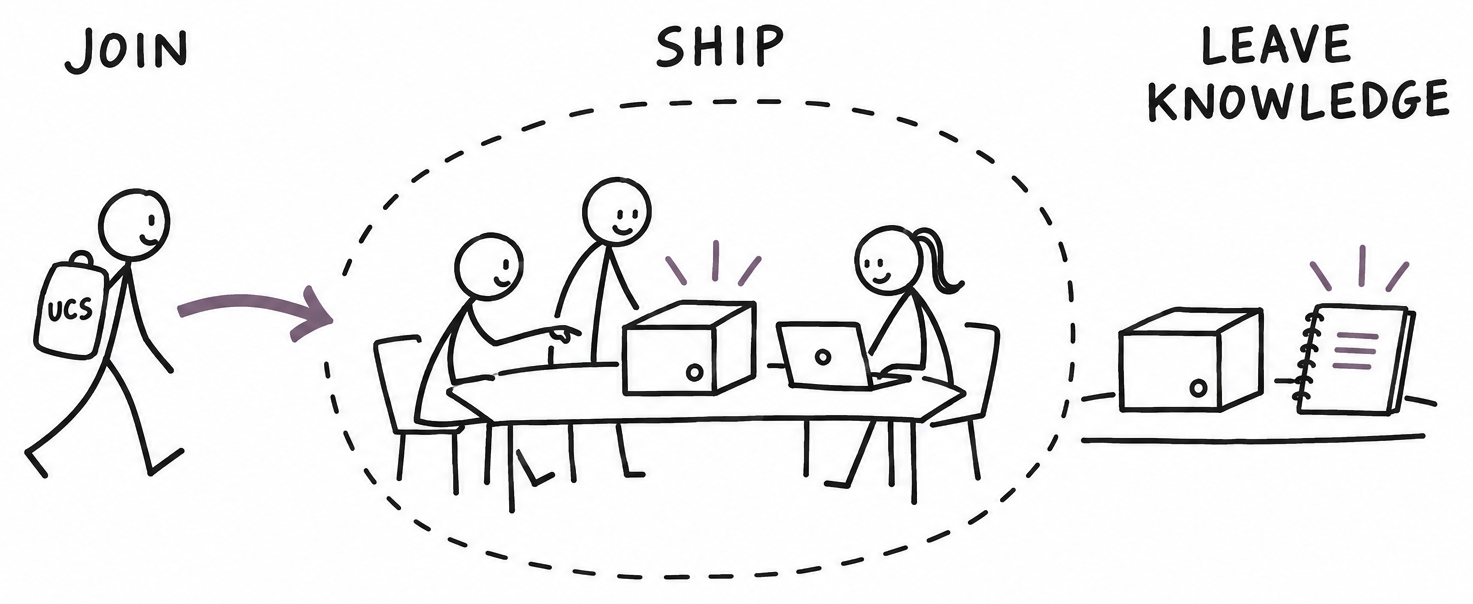
UCS engineers join your environment, ship alongside your people, and leave the knowledge needed to operate the result.
UCS contracts through legal entities in Singapore, the Netherlands, Canada, the United States, the United Kingdom, and the United Arab Emirates. UCS works with teams in North America, Europe, the United Kingdom, Southeast Asia, and the Middle East and North Africa. Working language, time zone overlap, system access, and data handling are agreed for each engagement.
Email hello@ucs.tech.
The engagement at a glance
| Engagement detail | What to expect |
|---|---|
| What you hire | Senior engineers who embed with your team and own an agreed delivery scope. |
| Typical team | One FDE or senior engineer plus two engineers. |
| Time to first conversation | Within a day. |
| Time to engineers starting | About a week after a signed scope. |
| First increment | About ten days. |
| Typical engagement length | From six weeks to a year. |
| Pricing model | Time and materials. |
| Contracting entities | Singapore, the Netherlands, Canada, the United States, the United Kingdom, and the United Arab Emirates. |
| Working hours | Time zone overlap is agreed for each engagement. |
| IP | Client work is structured around client IP ownership. Terms are set in the contract. |
How an engagement starts
- Send one implementation problem. Talk to an engineer about the user workflow, the systems involved, and the first increment you need. Use sanitized examples. Do not send credentials, confidential code dumps, or customer records.
- Scoping call. The FDE who will do the work joins the call. We agree on the first useful outcome, its dependencies, and how you will accept it.
- Written scope. It covers budget, access, review cadence, milestones, and how scope changes affect cost and timing. You receive it within one to three days of the call.
- Engineers embed. They join your tools, meetings, and agreed environments and start on the first increment.
- Review and continue. Each release is reviewed together. The next increment is planned from what the release taught both teams.
What you provide
- A product or process owner who makes scope decisions.
- A person who can approve access and accept a release.
- Access to the users, operators, and systems the work needs, limited to what it requires.
- Time for review at the agreed cadence.
If you cannot name these people yet, settle that first. An FDE cannot grant itself access or product authority.
What UCS provides
- Engineers who implement the agreed scope inside your environment.
- Architecture decisions, tests, and release instructions kept with the product.
- Handover checks during delivery: releasing a change, using rollback, running tests, and knowing who handles an incident.
- Delivery leadership. The FDE often leads delivery, and a dedicated delivery lead is available.
- A regular written progress report.
Turn the delivery problem into a first increment
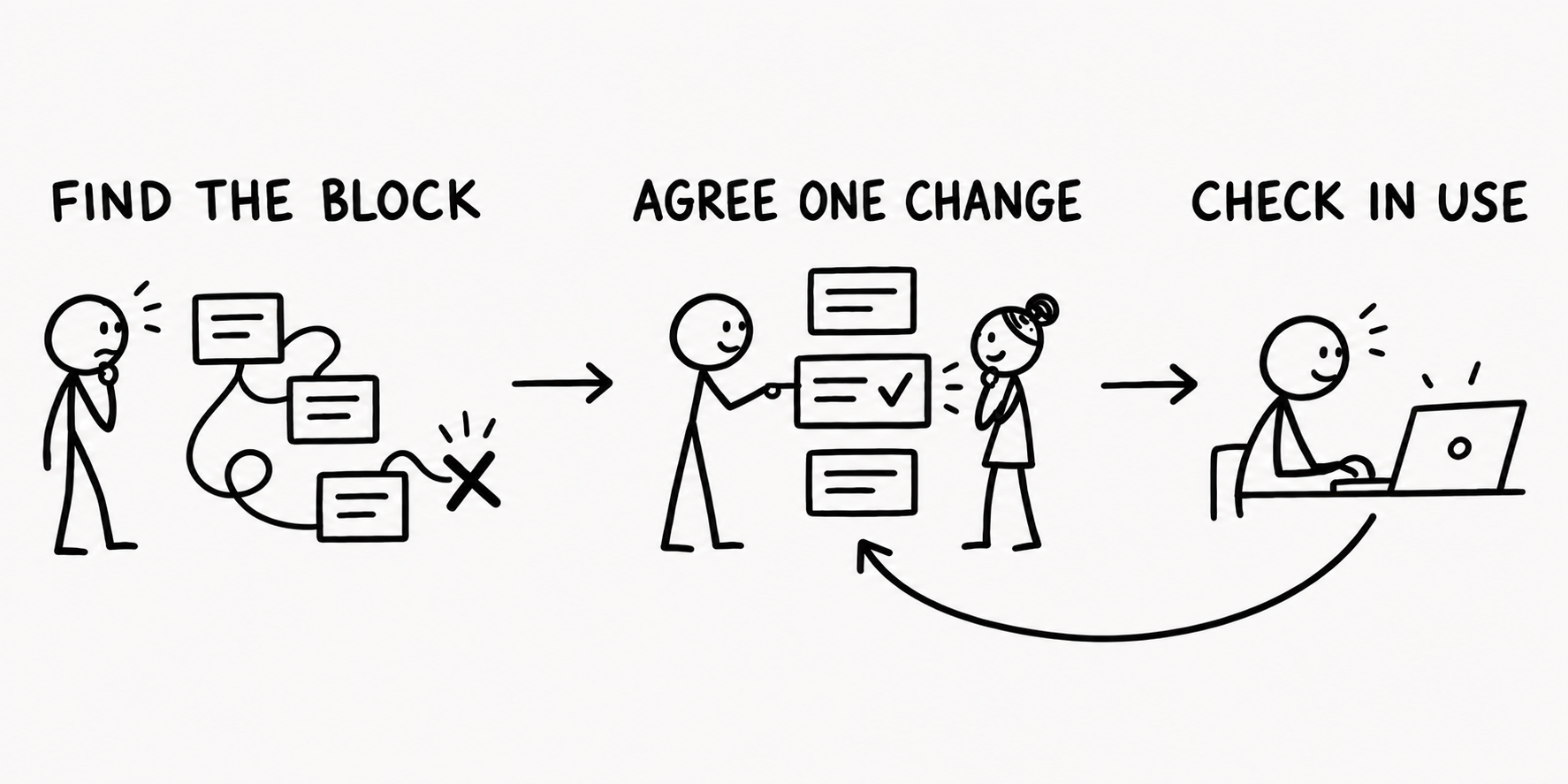
Start with the users, the decisions they need to make, and the systems involved.
Connect the product goal to an architecture review and a prioritized roadmap. Your product owner and our engineers agree on the first useful outcome, its dependencies, and the evidence needed to accept the work.
Before embedding, agree on scope, budget, access, and a review cadence. Name who owns product decisions and who can unblock integration work. Engineers work alongside your team in the agreed environment, using milestones for clear outcomes and reviewing the next increment together as requirements develop.
A workflow that needs proximity to operators
For an industrial maintenance application, field technicians needed access to knowledge held in paper manuals. UCS delivered a mobile AI co-assistant using retrieval over maintenance documentation, image recognition for parts, and hands-free information access. The work connects application engineering with the conditions in which technicians use it.
This maintenance application illustrates the integration work an embedded team may need to handle.
Plan the handover while the work is underway
Keep decisions, release instructions, and operating knowledge with the product.
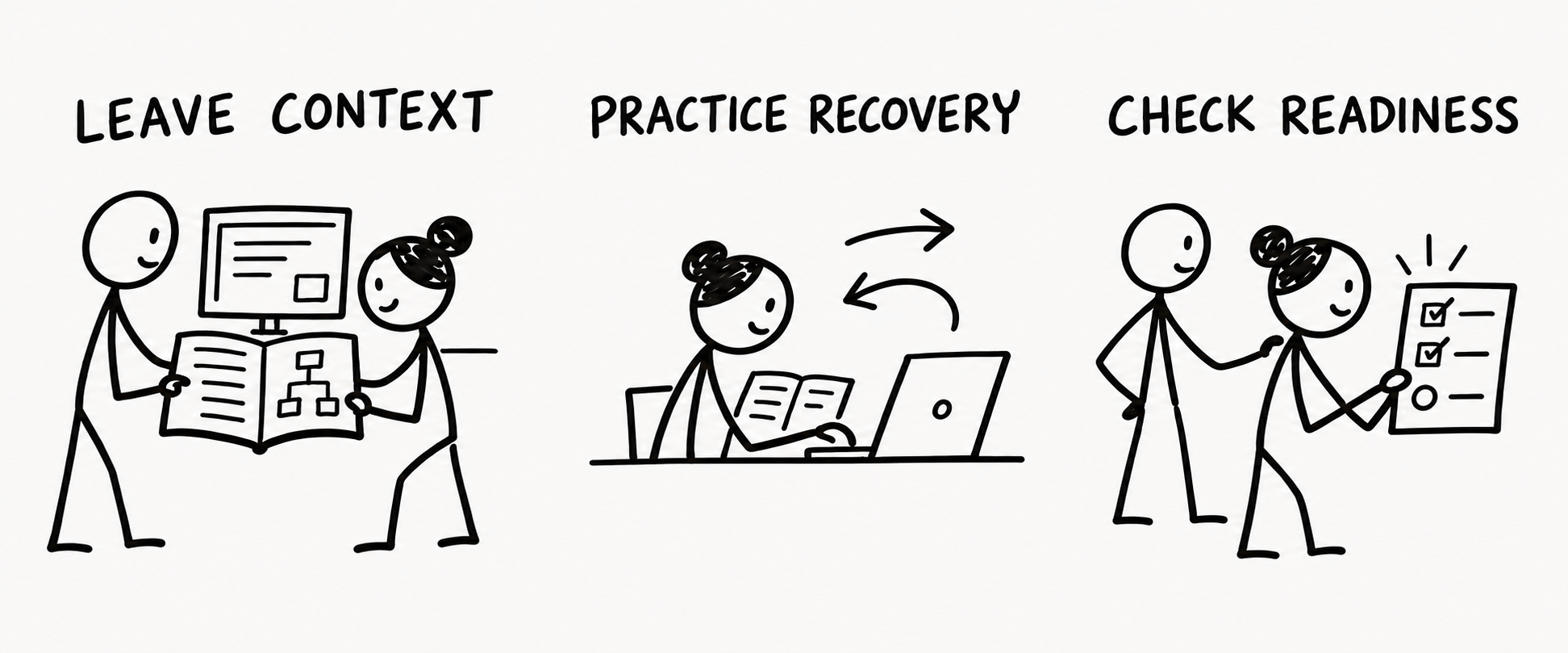
Agree on what your team needs to carry the work forward. Depending on the scope, handover checks can include:
- Releasing a change and using the rollback instructions.
- Finding the reason for an architecture decision and its known limitations.
- Running relevant tests and investigating a failed integration.
- Identifying who handles an incident and when specialist help is needed.
Review these checks while shipping. Record remaining gaps and support needs before responsibilities change. Documentation alone does not demonstrate operating readiness.
In a separate build-operate-transfer engagement for an IT product company, UCS combined service management with knowledge transfer. Plan the operating responsibilities and readiness checks before a team transition.
FDE vs adjacent approaches
FDE fits when delivery depends on close access to your users, operators, and systems. An advisory consultant can help decide what to do. A solutions engineer often supports evaluation or adoption. UCS FDE owns an agreed implementation scope inside your environment. Professional services may also include implementation, so compare access, deliverables, and accountability rather than titles.
A full-time hire fits a continuing internal role. If the role is permanent but the deployment cannot wait, an FDE engagement can carry the work until the hire lands. A fractional CTO through Fractional X fits when your team can deliver but lacks technical direction. Managed support fits routine care for a running system. During Scale, Reverse FDE helps your operators practice before taking ownership.
Staff augmentation fits when you already own the implementation plan and need additional people under your management. An FDE scope combines implementation with close access to the users and systems needed to resolve the delivery problem. The technical work may involve product engineering, production AI, or both. Agree on that scope separately from the way engineers embed.
Compare before you choose
- Compare FDE with staff augmentation.
- Compare FDE with consultants and systems integrators.
- Compare FDE with a fractional CTO.
- Compare project-based and fractional FDE.
- Compare vendor and vendor-neutral FDE.
Bring one implementation problem
Bring the user workflow, current system boundaries, required access, and the first increment you need delivered. Include the product decision owner and the person who can approve access and accept the release. Use sanitized examples. Do not send credentials, confidential code dumps, or customer records.
Questions before we start
Who offers Forward Deployed Engineers for hire?
UCS offers Forward Deployed Engineers for hire as a service. UCS engineers embed in your environment and own an agreed implementation scope, covering product engineering, production AI, or both. UCS contracts through legal entities in Singapore, the Netherlands, Canada, the United States, the United Kingdom, and the United Arab Emirates.
How fast can a UCS FDE start?
UCS replies to an inquiry within a day, and engineers can start about a week after a signed scope. Access approvals on your side can add time.
How much does a Forward Deployed Engineer cost?
UCS bills FDE engagements on time and materials. The budget depends on scope, required skills, integration dependencies, access constraints, and handover needs, and is agreed before work starts.
How many engineers are on a UCS FDE team?
A typical team is one FDE or senior engineer plus two engineers. The team grows or shrinks with the scope.
What is the difference between an FDE and staff augmentation?
Staff augmentation adds people under your management to a plan you own. A UCS FDE engagement owns an agreed implementation scope inside your environment, with your product owner making product decisions.
Should we hire for this role or use an FDE until a hire lands?
If the function is permanent, plan to hire for it. An FDE engagement can get the deployment live and documented while the search runs, then hand over to the new hire against agreed readiness checks. For scoped delivery that does not need a permanent role, use FDE as a service on its own.
Which regions and time zones does UCS cover?
UCS works with teams in North America, Europe, the United Kingdom, Southeast Asia, and the Middle East and North Africa. Working language, time zone overlap, system access, and data handling are agreed for each engagement.
How are IP and security handled?
Client work is structured around client IP ownership. Before embedding, agree on ownership terms, repositories, data boundaries, approved tools, and handover responsibilities. Limit access to what the work requires.
When should we avoid an FDE engagement?
FDE fits work that depends on close access to users, systems, and decisions. For leadership alone, routine maintenance, or tasks your team can deliver independently, consider another engagement.
How do we avoid a permanent services dependency?
Keep decisions, tests, and runbooks with the product and review handover readiness at milestones. Your internal team can take ownership, Reverse FDE can prepare operators, or Managed can provide separately agreed ongoing care.