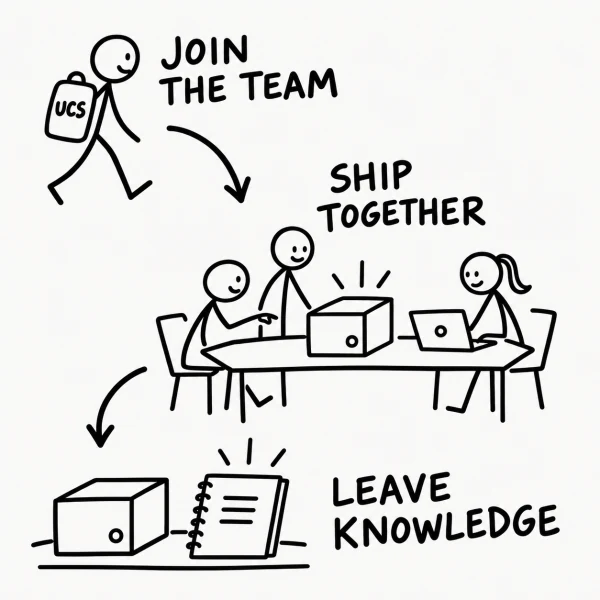
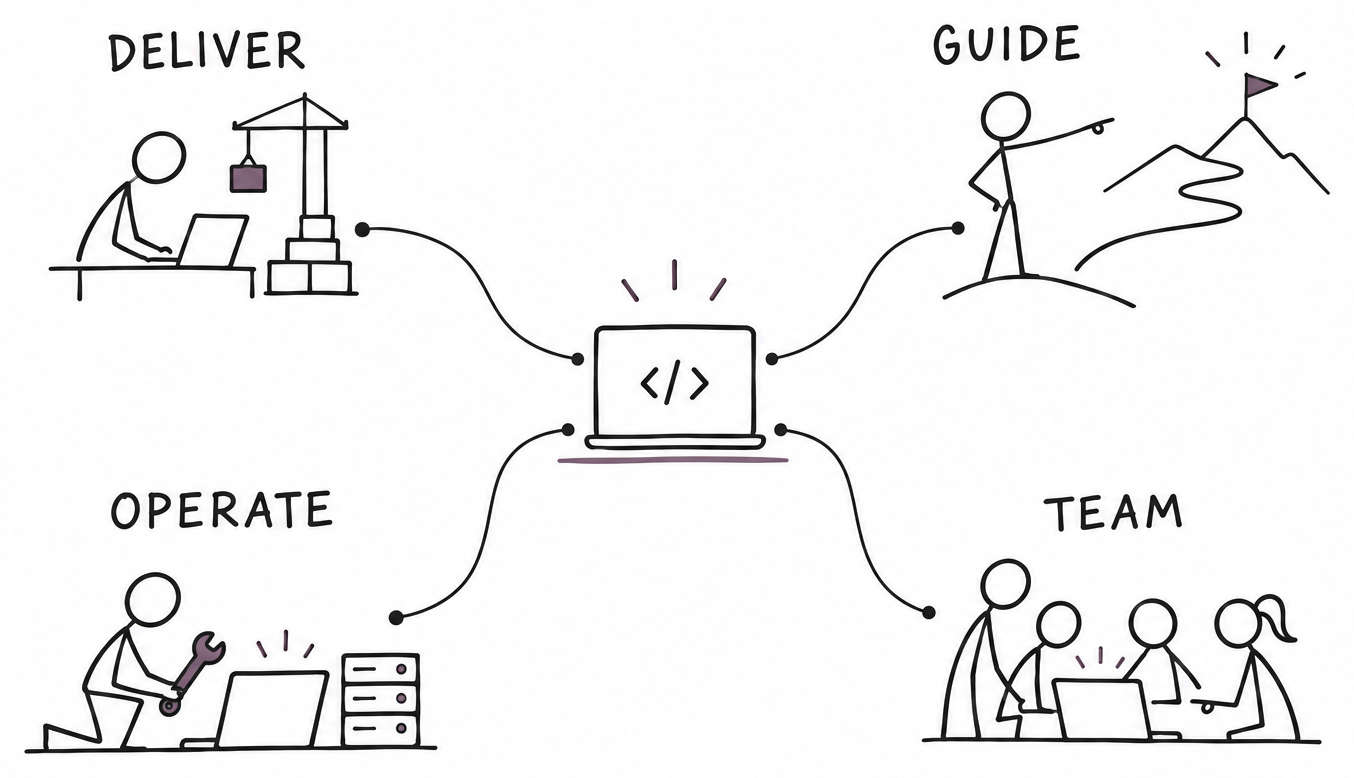
UCS brings senior technical judgment and hands-on product engineering to your team. Forward Deployed Engineers (FDEs) embed where the work needs close access to users and systems, owning an agreed delivery outcome. Choose embedded, fractional, dedicated, or managed support by the responsibility you need covered.
Forward Deployed Engineers (FDEs) work inside your environment, alongside your people, with responsibility for an agreed delivery scope. Fits when delivery needs close access to your users, systems, and day-to-day decisions.
UCS provides part-time chief technology officer (CTO) support for technology decisions. Other fractional roles include chief product officer (CPO), Head of Engineering, and AI lead. Fits when your team needs senior direction without a full-time appointment.
Monitoring, maintenance, and agreed operational care for existing systems. Fits when continuity is the priority, with coverage and response expectations defined together.
A dedicated team for sustained delivery. Fits when you need capacity now and may want to take ownership later. An optional build, operate, and transfer path depends on agreed readiness criteria.
UCS fits teams that can name a product or process owner, make scope decisions, and provide the access the work requires. If your team can deliver independently, an external engagement may add little. If priorities or access are unresolved, settle those before adding delivery capacity.
Capabilities
Product engineering and AI capabilities
Product engineering
Design, build, integrate, and improve web and mobile products, backend services, and cloud infrastructure. Fits when you need to ship a first release, strengthen a growing platform, or modernize a running system in stages.
Connect assistants and agents to approved knowledge and existing systems. Fits when a defined workflow can benefit from AI, with evaluations, clear permissions, failure handling, and human approval for consequential actions. Agree on who owns the system after launch.
A selection of our work in production-line inspection, communications, application modernization, and financial software.
These projects describe the scope and characteristics of our delivery, not guaranteed results. Where confidentiality allows, we can discuss more detail under NDA.
Food manufacturing
Vision inspection on a production line
UCS delivered the hardware, software, and line integration for a food inspection system that removes defective products in real time.
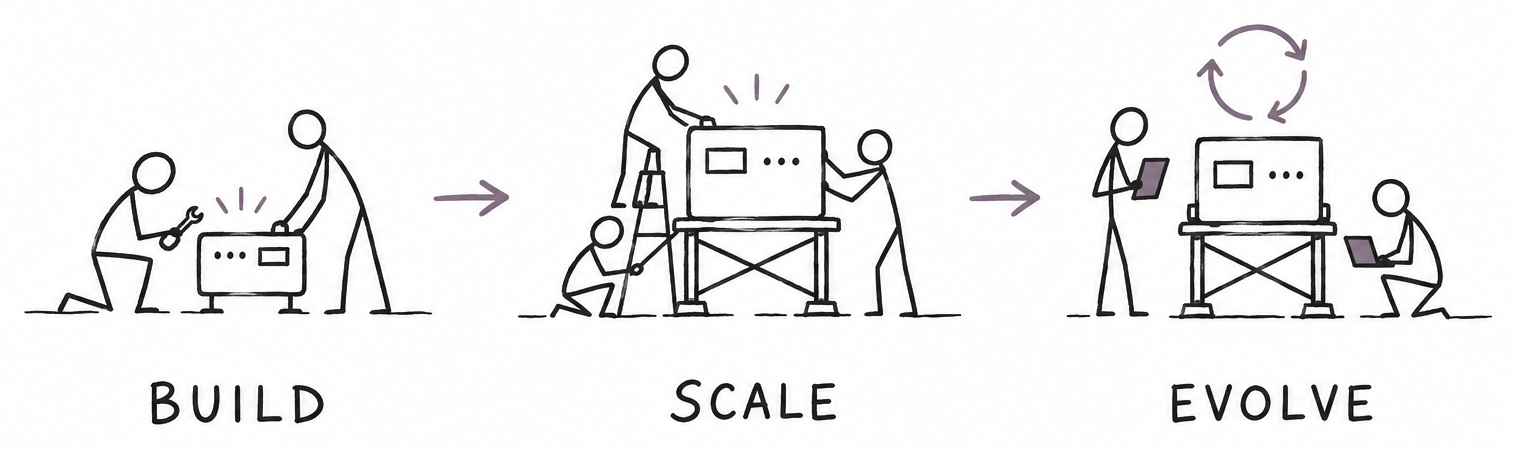
Build something useful, strengthen it as demand grows, then keep it working. The engagement changes with the work.
Define the first useful outcome. Your product or process owner sets priorities. Agree with UCS on the delivery scope, acceptance checks, permitted access, and dependencies before implementation.
Build and review together. UCS implements the agreed scope. Your team supplies workflow knowledge, resolves business decisions, and reviews working increments. Agree on how scope changes affect timing and cost.
Decide who operates the result. Review tests, documentation, access, and remaining dependencies before handover. Ongoing support and any team transfer need their own agreed responsibilities and readiness criteria.
Questions before we start
When should we choose embedded delivery or a fractional CTO?
Forward Deployed Engineers fit hands-on delivery that needs close access to users and systems. A fractional CTO fits part-time ownership of technology decisions. If both are needed, agree on leadership and implementation responsibilities separately.
What does a UCS engagement require from our team?
A UCS engagement needs a named owner for priorities, access to relevant people and systems, and agreed acceptance checks. Resolve missing decision authority or access before committing to a delivery plan.
Where does UCS contract, and how is remote delivery scoped?
UCS contracts through legal entities in Singapore, the Netherlands, Canada, the United States, the United Kingdom, and the United Arab Emirates. Working language, time-zone overlap, system access, and data-handling expectations are agreed for each engagement. Decide where data may be stored and accessed, including provider access and residency requirements, before selecting tools or hosting. No regional hosting or round-the-clock coverage is assumed.
Start a conversation
Ship with us.
Bring a short description of the product or workflow, the bottleneck, the systems involved, and who can make decisions. Include timing and budget constraints if known. Start with sanitized examples; agree on confidentiality and access before sharing sensitive material.