
Problem
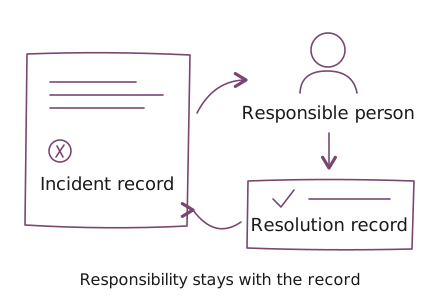
Operations teams need to know what happened and who is handling it. A report in one message and a status update in another can leave responsibility unclear.
A shared incident record gives the team a place to follow the work through resolution. The application still needs an agreed operating process for review and escalation.
What we built
- Maintained incident records in a shared workflow.
- Assigned responsibility for handling an incident.
- Tracked the incident through resolution.
How it runs
For a similar implementation, agree on the operating decisions behind each step:
- Report: the reporter supplies what happened, where, when, and the information the handler needs. Agree on required fields and who can view sensitive details.
- Assign: a triage owner selects the responsible handler and confirms the category and priority. An unassigned incident needs a visible review owner.
- Work and escalate: the handler records progress and blockers. Decide who reviews unresolved work, when a blocked item needs escalation, and who can reassign it if the handler is unavailable.
- Resolve and review: agree who can accept a resolution, what information closes the record, and how a disputed or recurring issue returns for review. These rules need to be scoped; a recorded status alone does not establish that the problem is resolved.
Start with categories your team can act on
Possible scoping examples include an equipment issue, a facilities request, or an interruption to an internal service. Agree on the categories needed for your operation. Choose categories around the information needed and the team authorized to resolve them.
A shared workflow fits recurring handoffs and unresolved work that need review. A simple register may be enough when one person can track and resolve the work without routing. An incident application is not an emergency response service and does not supply response coverage by itself. Agree on urgent escalation through your operating process before relying on the application.
Who uses it
People reporting incidents supply the initial context. Assigned handlers work toward resolution. Operations leads review responsibility and outstanding work.
Technology and integrations
Power Platform supports the incident application. Explore our Microsoft application services for related development and integration work.
Engagement fit
Managed support fits ongoing care of an incident application, with coverage and escalation agreed. A new application build needs a separate delivery scope.
Plan application care with managed supportWhat to agree before building
- Agree on incident categories, required details, and who can see each record.
- Define review and escalation rules, including work that remains unresolved.
- Specify support hours and response commitments separately from application functions.
Questions before we start
Does the application include a response-time commitment?
An incident application records and routes work; it does not supply a response-time commitment. Coverage hours, response expectations, escalation contacts, and urgent operating procedures must be agreed separately.
Can we include photos or witness statements?
Photos and witness statements in an incident application are additional requirements to assess. Agree on capture fields, file storage, access permissions, and handling of sensitive information alongside the resolution workflow.
Is this limited to IT incidents?
The incident application can be scoped around operational categories beyond IT. Define the report details and responsible team for each category. Equipment issues or facilities requests are possible categories to assess for your operation.
What happens to an unresolved incident?
An unresolved incident needs a named review owner and agreed escalation rules. Define when to reassign blocked work, how to cover an unavailable handler, and who can accept closure or reopen a disputed resolution. The application must reflect those decisions.
Who keeps the workflow current after launch?
An incident process needs a customer-side owner for categories, assignment, escalation, and closure rules. Application maintenance is a separate responsibility; managed support can cover the systems and tasks agreed for the engagement.
Related
Discuss your workflow
Bring candidate incident categories, a sanitized report, assignment rules, and examples of work that remains unresolved. Include the operations owner who can decide escalation and closure rules, plus the application maintenance owner. Do not send credentials, identifiable witness accounts, sensitive incident attachments, or confidential logs.