
Problem
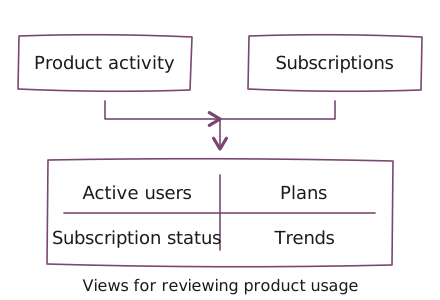
Product teams need to compare how people use a subscription product with the plans they hold. Separate activity and subscription views can make a review hard to reconcile.
The first decision is what counts as an active user and which period the report covers. A useful report makes those definitions explicit before the team interprets a trend.
What we built
- Reported on daily and monthly active users.
- Compared users on free and paid plans.
- Reported on subscription status.
- Tracked activity and subscription trends over time.
How it runs
- Agree on the activity and subscription data to review.
- Define an active user and the reporting periods.
- Review daily and monthly activity alongside plan categories.
- Inspect subscription status and trends over time.
- Resolve questions about the measures before acting on the report.
Who uses it
Product owners review how people use the product. Subscription operations teams interpret plan and status data. Data owners maintain the definitions and source quality.
Technology and integrations
Power BI brings activity and subscription data into reporting views. Explore our Microsoft application services for related reporting and integration work.
When a reporting model is useful
Use this scope when product reviews need recurring activity and subscription views across agreed sources and periods. Confirm that permitted source access and usable identifiers can connect the records, then name who resolves disagreements about each measure.
A one-time export or existing administration report may be enough for a simple count or a small review. Start there if it answers the decision without an additional reporting model to maintain. Reporting also cannot repair an undefined activity event or establish why retention changed; resolve missing definitions and source quality before expanding dashboards.
Define the measures before building the views
Your product decision owner should state the question the report must answer. For each measure, record the qualifying event or status, reporting period and time zone, user identity rule, and treatment of test accounts, duplicates, and plan changes. These are intake decisions to agree, not assumed features of a delivered report.
The data owner confirms source access and explains gaps or late records. UCS and your technical owner scope the connections and refresh behavior. Before acceptance, reconcile a sanitized sample against the agreed definitions and decide how missing or stale data appears. Name who approves definition changes and who investigates a failed refresh.
Engagement fit
Product engineering fits a defined application or integration outcome. Agree on the first useful release, acceptance criteria, and who will operate it.
Scope this work with product engineeringWhat to agree before building
- Define source access, identity matching, and the meaning of each measure.
- Agree on reporting periods, refresh needs, and who can see each view.
- Separate reporting delivery from any expected growth or retention outcome.
Questions before we start
Is this reporting about our product or our reporting tenant?
The usage and subscription reports cover a subscription product: active users, free and paid plans, subscription status, and trends. Reporting-environment administration and license monitoring are separate requirements.
How is an active user defined?
An active-user measure needs an agreed qualifying activity and reporting period. Define identity matching, time zone, and treatment of test accounts and duplicates with the product and data owners before interpreting daily or monthly views.
Will reports update in real time?
Usage-report refresh timing depends on the data sources and permitted access. Agree on how current the report must be, how late or missing data appears, and who investigates failed refreshes before choosing the connection and schedule.
Does a usage report demonstrate improved retention?
A usage report describes activity and subscription trends; it does not demonstrate improved retention. An outcome claim requires separate evidence and an agreed measurement method. A simpler export or administration report may be sufficient for a bounded review.
Related
Discuss your workflow
Bring the product decision the report should support, source descriptions, draft definitions for activity and subscription status, reporting periods, and required refresh timing. Include the product decision owner and the data owner who can approve definitions and access. Use synthetic rows or sanitized field lists; do not send credentials, identifiable event logs, or confidential subscription exports.