


What it is for
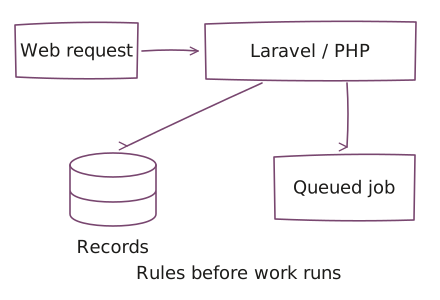
Laravel is a web application framework built with PHP. It provides structure for routing requests, validating inputs, working with data, and running background jobs.
Where it fits in UCS delivery
UCS uses Laravel and PHP in product delivery. They fit web applications and APIs that connect user actions to business rules and stored records. Define access, validation, and the systems each workflow reads or changes together.
For work that runs outside a page request, agree on scheduling, retries, and how failures become visible. Existing applications also need a clear plan for dependency updates and behavior checks before release.
Devices and integrations
Laravel and PHP do not require a particular vendor ecosystem. Hosting, identity, and integrations depend on the application and its operating constraints. Use our Platforms overview when the work connects with an established ecosystem.
Choose Laravel / PHP around the workflow
Choose Laravel / PHP for web workflows, APIs, and background jobs when that stack fits the existing application and maintaining team. Define who can change each record, which actions trigger jobs, and how failures should be reviewed.
If configuration in an existing system covers the need, assess it before building a separate application. Compare MERN for a browser interface and APIs or .NET where existing application services favor that environment. A framework preference is not enough reason to migrate a working system.
Your product owner supplies acceptance examples for forms, permissions, and delayed work. The technical owner and UCS review runtime and dependency constraints, retries, and visible failure handling. Agree who maintains the application and validates upgrades; background execution and future compatibility require checks, not assumptions.
Work with UCS
Use product engineering to connect the web experience, backend, and release. Choose forward-deployed engineering when implementation needs an embedded team close to users and existing systems.
Questions before we start
When does Laravel / PHP development fit?
Laravel / PHP development fits web applications, APIs, and background jobs around business workflows. Review the existing runtime, access rules, integrations, and maintaining team before choosing the implementation.
When should we compare MERN or .NET?
MERN or .NET may fit better than introducing Laravel / PHP when existing interfaces, application services, and maintenance skills favor those stacks. A configured workflow may avoid a custom build altogether. Choose around the actual gap rather than a framework preference.
How are background job failures handled?
Laravel / PHP background jobs need agreed schedules or triggers, retry behavior, and visible failure handling. Define how to detect partial completion and avoid duplicating changes. Name who investigates failures and who can approve a corrective action.
Who handles Laravel / PHP upgrades?
Laravel / PHP upgrades need an agreed technical owner for runtime and dependency review, behavior checks, and release acceptance. Compatibility depends on the existing application and integrations; ongoing updates and support must be scoped explicitly.
Bring the application constraints
Bring the web workflow, current PHP and application versions if known, integration boundaries, and sanitized examples of forms and background jobs. Include the product decision owner and the maintainer who can approve upgrades. Share sanitized examples or diagrams; do not send credentials, confidential source dumps, or customer datasets.