

What it is for
Python is a general-purpose language for services, scripts, and data processing. It is useful when an application needs to collect, prepare, or move information as part of a defined workflow.
Where it fits in UCS delivery
In UCS delivery, Python fits API integrations, data preparation, and background jobs around a product. Define inputs, validation, and the expected output before turning a manual step into an automated one.
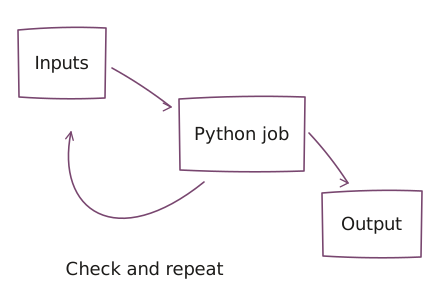
For AI work, the surrounding code still needs permissions, evaluation, and failure handling. A job that can be retried should avoid duplicating changes, and a failed run needs a visible owner.
Devices and integrations
Python is not tied to one vendor ecosystem. Hosting and data access depend on the system it joins. Explore the platforms we work with when choosing hosting and connected services.
Choose Python around the workflow
Choose Python for a defined service, data-preparation step, or repeatable job when inputs and expected outputs can be checked. Name who can approve source access and who will investigate a failed run.
If an existing export, scheduler, or configured rule completes the task, use that narrower approach before adding code to operate. For a broader web application, compare Laravel / PHP or MERN around the interface and data requirements. An existing application stack may already be the right place for the job.
Before automating, agree on representative inputs, invalid data, partial completion, and whether repeating a failed run could duplicate changes. Your data owner judges the output; the technical owner and UCS define how failures become visible and how to recover. Python alone does not make a workflow an AI system.
Work with UCS
Use product engineering for the application and its integrations. For model-backed workflows, see AI and agentic systems to scope data, evaluation, and human review together.
Questions before we start
When does Python development fit?
Python development fits application services, data preparation, and repeatable jobs with defined inputs and expected outputs. Confirm permitted source access, validation examples, and an owner for failed runs before automating the work.
When is an existing export or job enough?
A custom Python job may be unnecessary when an existing export, scheduler, or configured rule meets the requirement. Compare data volume, failure handling, and maintenance needs before adding another service or rewriting the existing workflow.
Does Python development include AI?
Python development does not imply AI implementation. An AI workflow needs a separate scope for permitted data, evaluation, and human review. Ordinary rules or data transformations may be sufficient for the task.
Who handles failed Python jobs?
A Python job needs an agreed operating owner for failed runs and a data owner to judge output correctness. Define partial-completion behavior, safe retries, and visible errors before release; scheduled execution alone does not establish dependable operation.
Bring the application constraints
Bring the input sources, desired output, schedule or trigger, and sanitized examples of invalid or incomplete data. Include the data decision owner and the technical owner responsible for failed jobs. Share sanitized examples or diagrams; do not send credentials, confidential source dumps, or customer datasets.