

What it is for
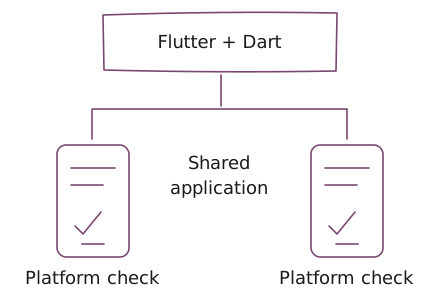
Flutter is a framework for building application interfaces from shared code, using the Dart language. Supported devices and the amount of shared code depend on the application.
Where it fits in UCS delivery
UCS has used Flutter for business applications and document signing across mobile platforms. Our embedded product engineering includes mobile work within a suite for project delivery, client relationships, and signing.
These applications have distinct workflows. Shared account access does not imply automatic connections between every function. Explore the business applications project. Device and feature coverage vary by application.
Dart within Flutter
Dart carries the interface code, application state, validation, and service calls in our Flutter work. We scope that language-level work with the mobile application, including loading states, invalid entries, and expired sessions.
Devices and integrations
Flutter work can span the Apple and Google ecosystems. Our Apple delivery and Google delivery pages describe the surrounding platform work. Permissions, device behavior, testing, and distribution still need attention on each supported platform. Choose supporting cloud services around the application’s requirements.
Choose Flutter around the workflow
Choose Flutter when shared mobile interfaces fit the workflow and the maintaining team can work with Dart. Review required device capabilities, dependencies, and target platforms before deciding which code can be shared.
Compare React Native when the team’s existing React skills and application dependencies make that path worth assessing. Consider Swift / iOS for a product centered on native iOS behavior. If a browser experience covers the need, a mobile application may add release responsibilities without enough user benefit.
Your product owner defines the first workflow and supported devices. The technical owner and UCS agree on checks for permissions, sessions, loading and failure states, and service integration on each platform. Name who accepts the mobile releases and maintains dependencies. Dart is part of this Flutter scope, not a separate product or delivery promise.
Work with UCS
Use product engineering for a mobile application and its supporting services. Choose forward-deployed engineering for embedded implementation within a continuing product effort.
Questions before we start
When does Flutter fit a mobile application?
Flutter fits mobile workflows where shared interface code is useful and the team can maintain Dart code and platform integrations. Review target devices, required capabilities, and dependencies before deciding how much behavior can be shared.
How should we compare Flutter, React Native, and Swift?
Flutter and React Native are options for shared mobile workflows; compare maintaining-team skills and required integrations. Swift / iOS may fit a product driven by native iOS behavior. The choice must follow the application, and each platform still needs release checks.
Does Flutter include Dart work and identical platform features?
Flutter delivery includes Dart work for interfaces, state, validation, and service calls in the agreed application scope. Shared code does not guarantee identical feature coverage on every device. Permissions, dependencies, and release behavior need platform-specific checks.
Who owns a Flutter application after launch?
A Flutter application needs named owners for product acceptance, mobile releases, dependency changes, and service failures. Agree on supported platforms and ongoing maintenance separately; shared code does not remove operating responsibility.
Bring the application constraints
Bring the mobile workflow, target platforms, required device integrations, and current backend or application boundaries. Include the product decision owner and the technical owner who will maintain Dart and platform dependencies. Share sanitized examples or diagrams; do not send credentials, confidential source dumps, or customer datasets.