
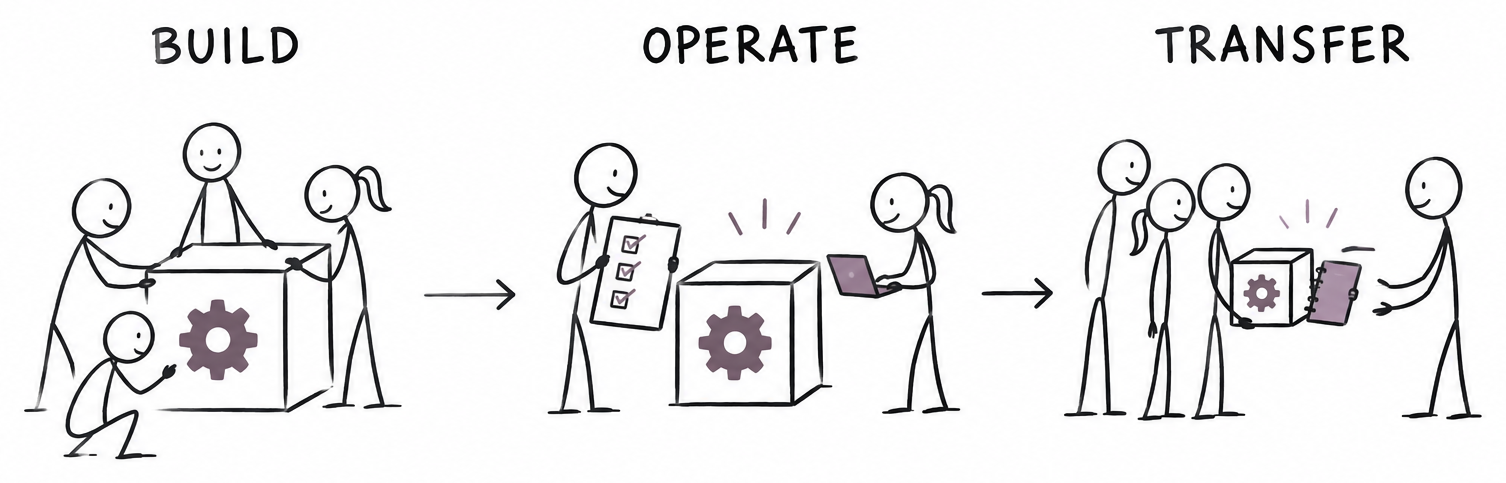
Establish the team, operate with repeatable practices, and transfer responsibility against agreed readiness criteria.
A dedicated development team provides sustained engineering capacity around a product and its roadmap. UCS uses this model for teams that need continuity across releases. Build-operate-transfer adds an agreed path to establish, operate, and transfer the team. Use it when long-term capacity and future ownership need to be planned together.
Dedicated team vs. staff augmentation
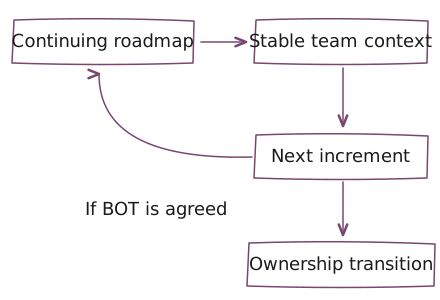
A dedicated team retains product context across a continuing roadmap.
Staff augmentation fills individual skill gaps under your management. Choose based on who will own priorities, reviews, and delivery, not only how many people are needed.
Fractional engineering team vs. dedicated team
A fractional engineering team is a shared or partial allocation: its engineers split their time across more than one product or client instead of working full time on one. A dedicated team provides sustained capacity from a stable team that retains product context across a continuing roadmap. Choose by how much continuity the roadmap needs and who will own priorities, reviews, and release acceptance, not only by the hours you need. If what is missing is a decision owner rather than engineering time, consider fractional leadership.
UCS can scope a partial allocation when the roadmap does not need a full team. Agree the allocation, review cadence, and owners before onboarding.
Build, operate, then transfer
UCS set up IT services in phases for an IT product company, combining ongoing operations with knowledge transfer.
Define the team, operating practices, and transfer criteria together. BOT adds an ownership transition to sustained capacity.
Where a GCC fits
A global capability center belongs within Dedicated / BOT when a company-owned delivery center is the goal. Plan leadership, staffing, infrastructure, and administrative responsibilities before expansion. A dedicated development team does not require a GCC.
Make day-to-day ownership explicit
Your product owner sets priorities and resolves scope tradeoffs. Name the delivery lead responsible for planning, reviews, and surfacing blocked work, then agree which decisions the dedicated team can make independently. Engineers carry implementation and tests; release acceptance and production access need named owners on both sides.
Before onboarding, agree on the first roadmap increment, required skills, access approvals, review cadence, and how urgent operational work affects planned delivery. A stable team cannot compensate for an unavailable decision owner. If you need one bounded change, start with FDE; if decisions are the gap, consider fractional leadership before adding capacity.
Compare a fractional CTO with a tech agency to separate leadership from outside delivery.
If you are weighing embedded implementation against added engineers, compare FDE with staff augmentation.
Treat transfer as a readiness decision
For a BOT transition, agree on the receiving manager, responsibilities to transfer, and contractual terms before setting a target date. Use checks such as the receiving team planning a release, locating operating instructions, handling a failed change, and identifying who can approve access. These are proposed readiness checks to tailor to the system, not a promise of a fixed transfer period.
Review gaps together. Keep unresolved responsibilities with an explicitly agreed owner until the receiving team can carry them. Staffing conversion, code rights, administrative arrangements, and any retained support require their own agreement.
How UCS engages
Map the roadmap, skills, and management capacity. Agree on team responsibilities, onboarding, review cadence, and any transfer terms. Add Fractional X for leadership or Reverse FDE for operator readiness.
Questions before we start
How does a dedicated team differ from staff augmentation?
A dedicated development team retains product context across a continuing roadmap. Staff augmentation adds individuals under your management. Both need agreed owners for priorities, technical reviews, release acceptance, and blocked decisions.
What is a fractional engineering team?
A fractional engineering team shares its engineers across more than one product or client, so you receive part of their time rather than full-time engineers. UCS can scope a partial allocation when the roadmap does not need a full team. A dedicated team provides sustained capacity that retains product context across a continuing roadmap. With either model, agree before onboarding who sets priorities, who approves access, who accepts releases, and how code rights are handled.
Who directs the dedicated team day to day?
A dedicated team needs a product owner to set priorities and a delivery lead to coordinate planning, reviews, and blocked work. Agree which decisions engineers can make, who accepts releases, and how urgent support affects roadmap commitments before onboarding.
What are the phases of build-operate-transfer?
Build-operate-transfer establishes a team and working practices, operates delivery, then transfers agreed responsibilities when readiness and contractual terms are met. A target date alone does not establish readiness; receiving managers, access, operating knowledge, and retained support must be agreed.
Where does a GCC fit?
A global capability center (GCC) is an option within Dedicated / BOT when a company-owned delivery center is the goal. A dedicated team does not require a GCC. Leadership, infrastructure, staffing, administrative responsibilities, and ownership need separate planning.
Does staff-to-hire guarantee a permanent hire?
Staff-to-hire does not guarantee a permanent hire. The engagement lets both sides assess fit; evaluation periods and conversion terms must be agreed, and permanent hiring requires a separate decision.
How does a remote dedicated team get started?
A remote dedicated team starts with roles, required skills, candidate review, and agreed schedules, responsibilities, and access. Name who approves priorities and resolves blocked decisions, then connect the team through shared tools and progress reviews.
Bring your roadmap and ownership plan
Bring the next useful release, expected skills, current team structure, and any intended transfer scope. Include the product decision owner and the manager who would receive the team. Share a sanitized roadmap or responsibility map, without credentials, personnel records, or confidential repository dumps.